Why Cherry Hills Village Has No Real Median: Reading a Market Priced by the Acre
July 23, 2026
July 23, 2026
July 23, 2026
Pull up five real estate dashboards for Cherry Hills Village on the same afternoon and you will see five different medians. One reports the community at $2.2 million. Another puts it near $3.8 million. A third publishes a listing median close to $5.9 million. The spread is not a rounding error. It is the single most important thing to understand before you write an offer here.
In Cherry Hills Village, the "median" is a symptom of a thin market, not a comp. Land drives price, zoning tier drives land, and pocket drives everything else.
Every source below was published within a few months of each other in 2026. Each one is technically correct. None of them describes the same house.
| Source (2026) | Reported median | What it counts |
|---|---|---|
| Summit Colorado Realty, Feb | $2,205,000 sale price | 6 closed sales, 117 median DOM |
| Zillow ZHVI, April 30 | $3,245,374 typical value | Modeled estimate across all homes |
| Orchard, last 30 days (June) | $4,000,000 sale price | 7 sales, down 7% YoY |
| Realtor.com, March | $4,222,500 list price | 50 active listings |
| Redfin, March closed sales | $4,999,000 sale price | 12 closed sales |
| Altos Research, June 21 | $5,937,500 list price | 28 active single-family listings |
Six numbers, one city, a spread of roughly $3.7 million. If you were told the "median" was $2.2M and walked into a showing expecting mid-market inventory, you would be looking at a house that costs more than double what you budgeted. If you were told $5.9M and adjusted your search accordingly, you would miss most of what actually trades.
The gap exists because each dashboard is measuring a different slice: active listings skew high, closed sales skew toward whichever handful of properties happened to record that month, and modeled values average across a housing stock that ranges from unrenovated 1960s ranches to newly built 11,000 square foot estates. In a city where roughly 6 to 15 homes close in a given month, one $10 million sale reweights the whole picture.
Cherry Hills Village recorded around 142 total transactions in 2025, a slight tick up from 134 in 2024. Divide that across twelve months and the typical month clears somewhere between 10 and 15 closings. Redfin reported just 12 closed sales in March 2026. Summit Colorado Realty reported 6 in February.
Volume that thin means the median moves with the mix, not with the market. When two trophy estates close in the same window, the median jumps. When only mid-tier resales record, it drops. Redfin's rolling three-month figure for the period ending May 2026 landed at $3.8 million, up 27.7 percent from the same period a year earlier. That number is real, but it is not a growth rate you can annualize. It is the arithmetic of scarcity.
Two closings from earlier in the spring make the point. On March 19, 2026, 11 Cherry Hills Drive sold for $9.75 million. The next day, 1515 East Tufts Avenue closed at $4.999 million. Both are luxury sales in the same city. Neither tells you what the other is worth.
Cherry Hills Village writes lot size into its zoning code, and the code is the reason houses sit as far apart as they do. The city's residential development standards define four tiers:
The Cherry Hills Village Municipal Code Chapter 16 lays out the rest. Before you build a pool, guesthouse, or sport court, verify the parcel's zoning tier, because your buildable envelope changes with the district.
The practical consequence for a buyer is this: two homes with nearly identical interiors, similar square footage, similar finishes, and similar street addresses can trade $2 million apart if one sits on a 2.5 acre R-1 parcel and the other on a 16,000 square foot R-3A lot. Price per square foot as a lone metric misses that entirely. Realtor.com pegged the community at $580 per square foot in early 2026 and Redfin at $582. Useful as a floor. Useless as a comp.
Altos reported that 43 percent of active listings carried a price reduction in mid 2026. That figure is not evidence of a market crash. It is evidence of what happens when sellers price from a square footage template in a market where land does most of the work.
The city is not one market. It is a set of them, each with its own tempo. Public inventory data through the spring of 2026 showed dramatically uneven listing activity from one subdivision to the next, with Old Cherry Hills, for instance, holding roughly five active listings in March while other pockets had zero.
A few patterns worth knowing before you tour:
The city spans three ZIP codes: 80113, 80111, and 80121. Comparables that cross a ZIP boundary or a zoning tier usually are not comparables at all.
Redfin's competitiveness snapshot for the community reported that homes typically sell in around 8 days at the ready-to-move end of the market, with hot properties going pending in 3. That is the story for well-priced, well-presented homes with strong lot utility. The rest of the market moves on a different clock.
At the $4 million and above tier, days on market run longer. The 2026 report from a local market summary noted that properties above $4 million averaged 90 plus days to close, with 14 total sales above that price point in the trailing twelve months, and three above $6 million. The higher you climb, the smaller the buyer pool, and the more patience the sale requires.
For a buyer, that changes strategy. On the right lot in the right pocket with the right condition, you compete against multiple offers on a compressed timeline. On a $6 million estate that has been overpriced for two quarters, you have room to negotiate that would be unthinkable elsewhere in the metro.
If you are comparing Cherry Hills Village against Greenwood Village, Castle Pines Village, or any of the metro's other established luxury markets, the discipline is different. Greenwood Village's February 2026 median list price was $1.719 million against 67 active listings. That is a market where broader averages carry signal. Cherry Hills Village is not.
Three shifts in approach that tend to pay off:
The rhythm of daily life here reinforces the same idea. The city reports more than 34 miles of trails, 47 acres of parks and open space, the 3.75 mile local stretch of the High Line Canal now being resurfaced, and Quincy Farm's 17.5 preserved acres. Cherry Hills Country Club has hosted 14 national championships since its founding in 1922. These are lifestyle assets buyers pay to be near, and they do not distribute evenly across the city.
Which published median should I trust? None of them in isolation. Directional reads across two or three sources are useful. For a specific home, closed comps in the same zoning tier and pocket over the last six to nine months matter far more than any citywide figure.
Does price per square foot work here? As a sanity check, yes. As a comp, no. In a market where parcels range from 16,000 square feet to 5 plus acres, per-square-foot math on the house ignores the largest single component of value.
Is this a buyer's market or a seller's market? Both, depending on price band and property. Well-priced homes with strong lot utility often see multiple offers within a week. Overpriced or dated listings above $4 million can sit for a full quarter or longer. Altos reported 43 percent of active listings carried a reduction in mid 2026, which is a selectivity signal, not a demand collapse.
How much lead time should I expect? Spring inventory typically arrives March through June. Sellers who have been waiting for stable conditions look to list in that window. If you are targeting a specific pocket, be prepared to wait through a full listing cycle to see two or three true substitutes.
If you are weighing Cherry Hills Village against other Denver-area luxury markets, or trying to price a home on an estate lot inside the city, the numbers on a portal are the beginning of the conversation, not the answer. Anne Dresser Kocur works this market with the comp-level detail it actually requires. Book an appointment to talk through the pocket, the parcel, and the price that fits your move.

Where to Play Near Home, From Championship Private Clubs to a Historic Public Course.
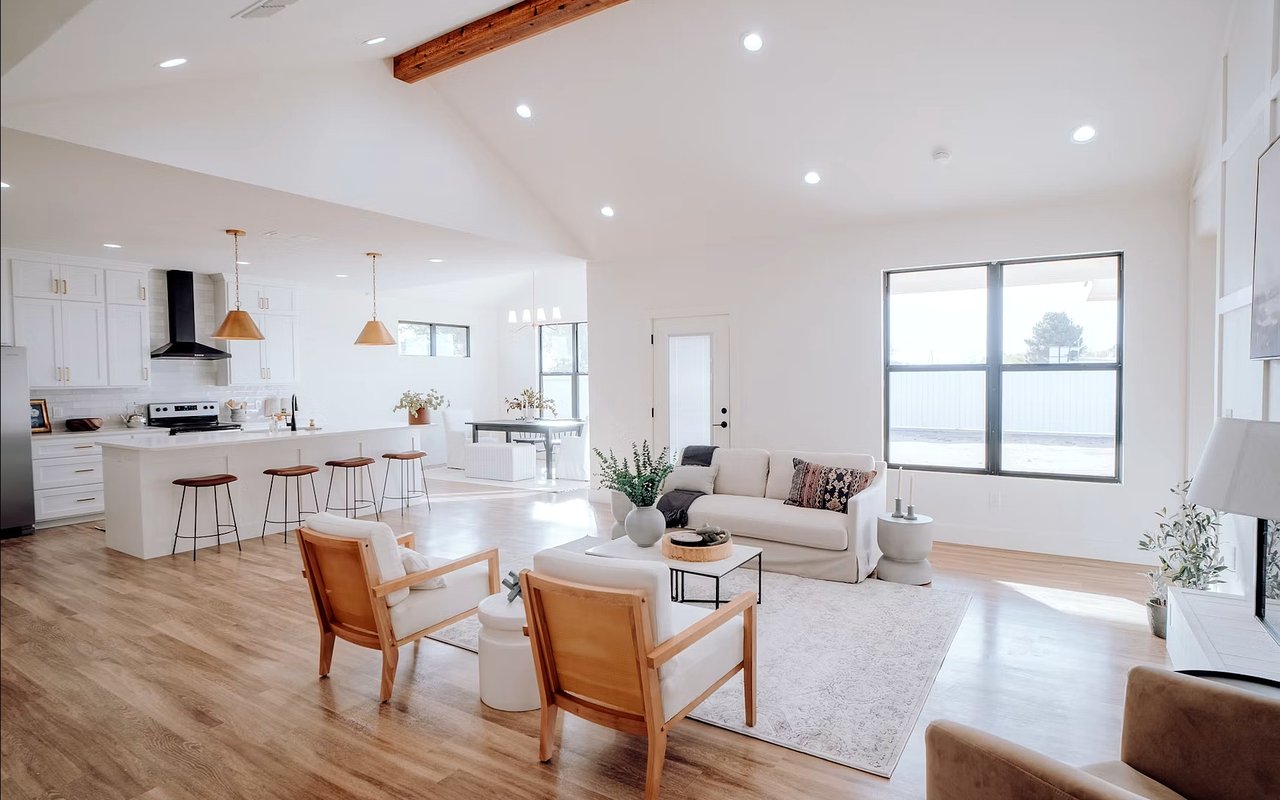
A Practical Guide to Presenting Your Property at Its Best, From The Preserve to Polo Reserve.

Where I Send Clients for Fine Dining, Elegant Shopping, and Fresh Air Near Belleview Station.

A Denver Agent's Checklist for What Actually Matters When You Walk Through a Home.
Whether you're thinking about buying, selling, relocating, or simply want to understand today's market, Anne would love to hear from you.