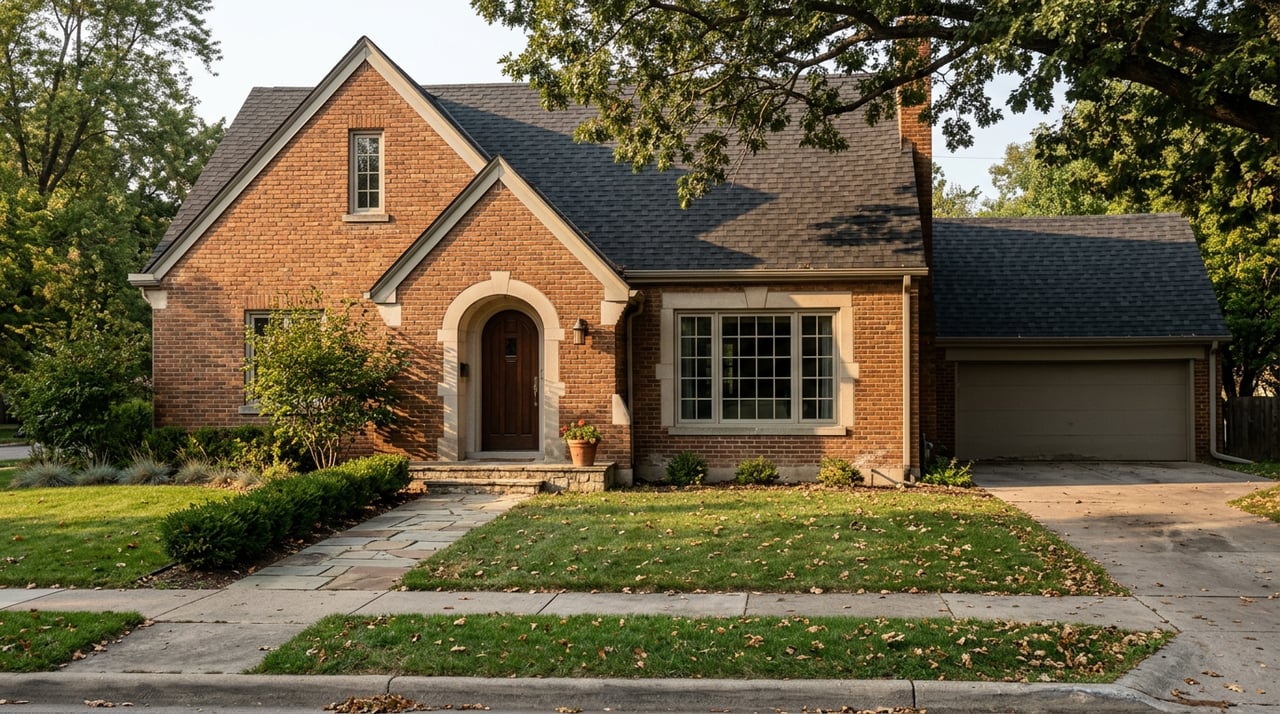
Walk any block in Cory-Merrill on a Tuesday evening and you'll pass brick ranches and tudors with the porch lights on, tree canopy thick enough to shade both sidewalks at once, and not a single storefront. No coffee shop on the corner. No bar with a chalkboard sign. The neighborhood between Mississippi Avenue, Colorado Boulevard, I-25, and University Boulevard is almost entirely residential, and it has stayed that way since returning veterans first built here after World War II.
That absence is the whole story. Cory-Merrill has no commercial core of its own, which means the things that normally anchor a neighborhood's social calendar, a favorite bar, a diner, a shop window you check on your walk, don't exist inside its own boundary lines. So where does a neighborhood without a main street actually gather? The answer says more about how Cory-Merrill functions than any list of nearby restaurants would.
The neighborhood association meets somewhere else
The Cory-Merrill Neighborhood Association has been organizing this area for more than three decades, and its meetings don't happen in Cory-Merrill. The CMNA holds its general neighborhood meetings on the first Wednesday of February, May, August, and November at the Kirk of Bonnie Brae, a United Church of Christ congregation at 1201 S. Steele Street, which sits just west of University Boulevard in the neighboring Bonnie Brae neighborhood, not Cory-Merrill itself.
The same is true of the association's signature summer tradition. CMNA's Food Truck Nights run through the season in the Kirk of Bonnie Brae's own parking lot, from 5:30 to 7:30 in the evening, with the church selling beer and wine by the cup to support its ministries since outside alcohol isn't permitted on site. A neighborhood with no plaza, no green space built for gathering, and no commercial parking lot of its own has effectively rented one from the congregation next door for years, and nobody seems bothered by the arrangement. The CMNA runs on a suggested $25 per household donation that covers its quarterly newsletter, its website, and the events it hosts, a genuinely small operating budget for an association that has kept a neighborhood identity alive for this long without a single business address to call its own.
That identity runs deeper than the boundary lines suggest. The neighborhood's name comes directly from two schools built into its social geography, Cory Elementary and Merrill Middle School, both still operating and both sitting inside the neighborhood they were named for. Housing stock here skews toward single-family homes almost exclusively, with few to no condos, duplexes, or apartment buildings breaking up the pattern, which is part of why the streets read as quiet and low-turnover even on a summer weeknight.
What's actually within walking distance
Step outside Cory-Merrill's own western edge onto University Boulevard and the picture changes fast. The Bonnie Brae commercial strip, technically its own neighborhood but functionally the retail extension every Cory-Merrill resident treats as theirs, runs a few blocks of small, independently owned businesses that have mostly stayed in place for years rather than turning over with each retail cycle.
A short list of what's still there:
- Bonnie Brae Ice Cream, at 799 S. University Blvd, a homemade-flavor institution that draws lines out the door on warm nights
- Bonnie Brae Liquor, at 785 S. University Blvd, serving the neighborhood since 1978
- Bonnie Brae Cleaners, at 715 S. University Blvd, a garment-care shop that has operated since 1957
- Bonnie Brae Travel, planning trips for neighborhood clients since 1965
- Wish Gifts, a locally owned gift shop at 750 S. University Blvd that's been in business since 2012
- Campus Lounge, at 701 S. University Blvd, a former sports bar turned neighborhood beer garden with year-round outdoor seating
One of the newer names on the strip is Ni Tuyo, a Mexican kitchen and mezcal bar at 730 S. University Blvd from chef Silvia Andaya, known locally for Adelitas Cocina y Cantina and La Doña Mezcaleria. Her son-in-law Nathan Ayala-Schmit runs the operation, built around molcajetes, a curated list of mezcal and tequila, and a patio meant for lingering rather than turning tables. It's the kind of addition that shows the strip still turns over occasionally even as its oldest tenants hold steady, a cleaners from the Eisenhower era and a mezcal bar just down the block from it.
None of this is inside Cory-Merrill's own footprint. It's the neighborhood next door, and Cory-Merrill residents walk to it anyway, because walking to it is the only version of a main street this particular neighborhood gets.
The farthest borrowed institution of all
Keep heading down Colorado Boulevard past the neighborhood's own eastern edge and you'll reach the University Hills Farmers Market, now in its ninth season at a relatively new home at Wellshire Presbyterian Church, 2999 S. Colorado Blvd at Amherst Avenue. The market runs Saturdays from 9 a.m. to 1 p.m. through October 31 this year, with more than 60 vendors set up in the church's north parking lot, a heavier produce focus than some of the city's bigger markets, and enough free parking that it doesn't turn into a search for street spots the way denser markets do.
It relocated a few blocks south of its previous spot in 2025, and it's close enough that a Saturday morning bike ride down Colorado Boulevard from anywhere in Cory-Merrill gets you there before the good tomatoes are gone. It's not a Cory-Merrill institution by address. It functions as one anyway, the third borrowed piece of infrastructure in a neighborhood that has learned to build its calendar around what's just outside its own lines rather than what's within them.
The one thing that does happen inside the boundary
If there's an exception to all this borrowing, it's the CMNA's own Spring Yard Sale, an annual event the association has organized long enough that it now draws shoppers from well beyond the neighborhood. For one weekend a year, Cory-Merrill's own residential streets become the draw, driveways and front yards standing in for the storefronts the neighborhood never built. The association's Halloween celebration works the same way, turning the same quiet blocks into the kind of gathering space that a commercial district would otherwise provide.
Taken together, these arrangements tell you something about what kind of neighborhood this actually is. Cory-Merrill was built for people who wanted quiet, single-family streets close to a bigger city's amenities, not a walkable retail core of its own. The tradeoff has held for decades, and the neighborhood association has spent thirty years making sure a lack of commercial space never became a lack of community. It borrows a church parking lot for food trucks, borrows another church for its own board meetings, and borrows the sidewalk of a neighboring commercial strip for its daily errands. The system works, largely because everyone involved seems to have agreed on it a long time ago and never bothered to renegotiate.
If you're weighing what a neighborhood like this actually offers day to day, that's worth sitting with before you compare square footage or lot sizes. A quiet residential grid with borrowed civic life is a genuinely different proposition than a neighborhood built around its own retail district, and it suits a different kind of resident.
If you have questions about how Cory-Merrill compares to nearby pockets of Denver, or what its housing stock looks like right now, Anne Dresser Kocur has spent more than three decades working these blocks and the ones around them. Book an appointment to talk through what fits.