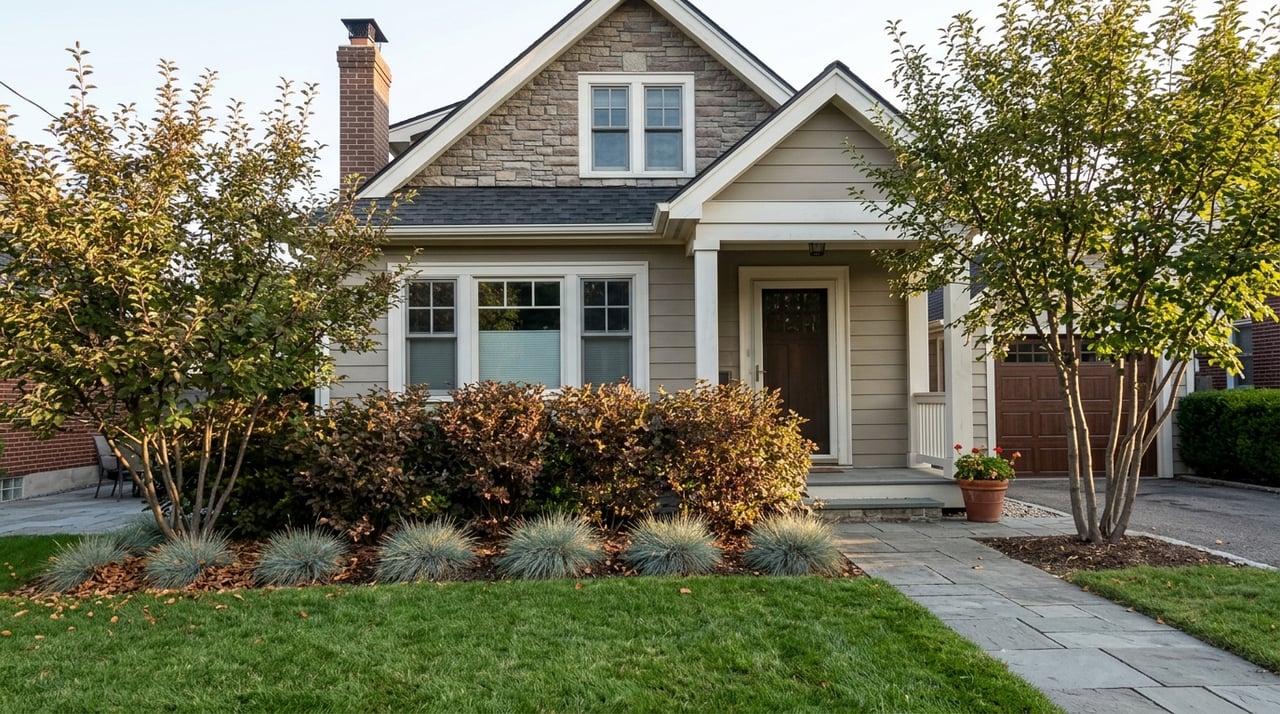
Central Park's Property Tax Story Just Changed, and Most Listings Haven't Caught Up
August 27, 2026
August 27, 2026
August 27, 2026
Picture two homes priced identically. One sits in Park Hill. The other sits two miles east in Central Park. Same price, same square footage, same school district boundary on paper. The tax line on the second listing runs noticeably higher, and most buyers assume it's a fluke in the county's math or a one-year blip in the assessment cycle.
The tax line isn't a fluke: Central Park's Westerly Creek mill levy remains in place to fund debt service and operations. What ended in 2025 was a separate tax increment financing arrangement, not the levy; that ongoing levy is a cost of the neighborhood, not a temporary build-out charge.
Central Park was built on the former Stapleton International Airport site, and like most large master-planned redevelopments in Colorado, it financed its own streets, parks, and utilities through special taxing districts rather than through the city's general fund. Buyers researching the neighborhood run into three names, and only one of them actually shows up on a tax bill.
If you're only reading the tax certificate, you'll see one district name and assume that's the whole story. It's the collection mechanism, not the full financing structure behind it.
Westerly Creek's own 2024 annual financial report puts the certified mill levy at 66.852 mills for that tax year, broken into 64.846 mills for debt service on Park Creek's general obligation bonds and 2.006 mills for general operations and maintenance of local parks and pools. The district's own site confirms the split runs roughly 97 percent debt service to 3 percent operations, which tells you exactly what that money is for. It isn't funding a police department or a library. It's paying down bonds that financed the neighborhood's own streets and pocket parks.
That debt service mill is the one worth paying attention to, because it doesn't run on a countdown clock tied to a build-out date. Park Creek's long-term finance plan, filed in December 2024, lays out repayment schedules across senior bonds, subordinate bonds, and developer advances made by the original master developer. Nowhere in that plan is there a stated early payoff year. The mill levy exists to service debt, and it will exist for as long as that debt does.
Across Denver generally, mill levies land anywhere from the 70s into the 140s depending on which combination of city, school, and special districts apply to a given block. Older, non-metro-district neighborhoods tend to sit toward the lower end of that range. Newer master-planned communities built through the metro district model, Central Park included, tend to land higher, because the roads and parks that a legacy neighborhood already had paid off decades ago are still being financed here through an active mill levy.
Here's the part that changed, and it's the part most explainers written before this year miss entirely.
Central Park's redevelopment used a second, separate financing tool alongside the Westerly Creek mill levy: tax increment financing, arranged through the Denver Urban Renewal Authority. According to Front Porch, under that structure, for 25 years running from 2000 through 2025, the growth in property and sales tax revenue generated by new development in the neighborhood was diverted away from the city's general fund and into a pool used to build regional infrastructure across the site. Roads, schools, fire stations, and larger park systems were financed this way. DURA issued $462 million in bonds against that revenue stream over the life of the project.
That 25-year window closed in the summer of 2025. The tax increment financing arrangement that quietly built much of Central Park's public infrastructure no longer exists. Any tax growth generated in the neighborhood from this point forward flows to the city, the schools, and other standard taxing entities the way it does everywhere else in Denver.
The timing shows up in the organization's own leadership. In December 2025, DURA announced January 2, 2026 as the scheduled departure date for Tracy Huggins, its executive director for 25 years. The Denver Gazette reported that DURA tied her departure directly to this milestone, noting that the Stapleton redevelopment was wrapping up its bond payments and describing the timing as "a pretty unique opportunity from a timing standpoint" to bring in new leadership focused on the authority's next projects.
For a buyer, the practical takeaway is this: any remaining regional infrastructure still on Central Park's list, whether that's a park expansion or a facility that hasn't broken ground yet, no longer has the tax increment financing engine behind it that built everything up to this point. It will need a different funding path, on a different timeline, and that uncertainty sits outside anything shown on a current tax bill.
Alongside the combined county tax bill, which includes the Westerly Creek mills, sits a separate, private assessment that Central Park buyers need to budget for on its own schedule. The neighborhood's Master Community Association charges a monthly fee, set at $58 per month as of January 1, 2026 for most for-sale residential homes, that funds community programming and upkeep of shared amenities like pools and parks. This isn't a tax and it won't appear on any county document. It arrives as a separate invoice from the association itself.
That gives a Central Park buyer two distinct collectors to track: the county, which bills the combined property tax including the Westerly Creek mills, and the Master Community Association, which bills monthly. Comparing a Central Park listing's total cost of ownership against a home in a neighborhood without a metro district or master association means accounting for both the combined property tax and the separate MCA assessment, not just checking the box that says "property tax."
According to Mile High Title Guy, since 2024, Colorado law has required sellers of residential property inside a metropolitan district organized on or after January 1, 2000 to give the buyer the district's official website as part of the transaction.
Before writing an offer on a Central Park property, three things are worth pulling directly rather than relying on what a listing sheet estimates:
None of this makes Central Park a worse place to buy. It has a genuine flagship park, a light rail stop with a 13-minute ride to Union Station, and sub-neighborhoods like Eastbridge and Conservatory Green with real walkable retail. What it does mean is that the tax increment financing arrangement ended in 2025, while the Westerly Creek mill levy remains to fund district debt service and operations. That ongoing levy belongs in the same comparison as the sticker price.
Does the Westerly Creek Metro District tax ever go away? There's no published schedule for that. Its debt service mills repay bonds held by Park Creek Metropolitan District, and the district's own long-term finance plan doesn't show an early payoff date.
Is tax increment financing still funding anything new in Central Park? No. The 25-year arrangement between the city and the Denver Urban Renewal Authority closed in 2025. Any regional infrastructure still on the neighborhood's list will need a different funding source going forward.
Where do I find the current mill levy and MCA assessment for a specific address? Ask your title company to pull the certified levy from Westerly Creek Metropolitan District's most recent annual filing, and ask the seller directly for the Master Community Association's current assessment schedule. Both numbers move, and neither is guaranteed to match what's posted online by the time you're under contract.
If you're weighing Central Park against another Denver neighborhood and want the real math behind a specific address before you write an offer, Anne Dresser Kocur can walk through the full cost picture with you. Book an appointment to get started.
This article is general information, not legal, tax or financial advice. Consult a qualified professional about your situation.



Where to Play Near Home, From Championship Private Clubs to a Historic Public Course.

A Practical Guide to Presenting Your Property at Its Best, From The Preserve to Polo Reserve.

Where I Send Clients for Fine Dining, Elegant Shopping, and Fresh Air Near Belleview Station.


A Denver Agent's Checklist for What Actually Matters When You Walk Through a Home.

Whether you're thinking about buying, selling, relocating, or simply want to understand today's market, Anne would love to hear from you.